

Immersive Evidence and Mixed Realities
at the Service of Law
The Immersive Evidence project aims to transform how evidence is presented and analyzed in judicial settings by leveraging mixed reality technologies—integrating real-time interactions between the physical world and digital elements through augmented reality (AR) and virtual reality (VR). The goal is to enhance the accuracy and interactivity of evidence examination while upholding the fundamental principles of justice.
In complex legal cases, presenting evidence can be challenging and not always easy to interpret for litigants, judges, jurors, and lawyers. Virtual and augmented environments provide improved visualization and a more precise manipulation of objects and scenes, bridging the gap in immersive comprehension of certain disputed situations.

General and Specific Objectives
- General objective : Enhance the clarity and reliability of evidence presented in court by utilizing 3D modeling and immersive environments.
- Specific objectives :
- Develop digitization techniques (3D, 360°) to create accurate models of real-world objects and scenes.
- Integrate these models into virtual courtrooms (VR/AR solutions via our interactive courtroom interface).
- Analyze the impact of immersive evidence on the perception of judicial actors (judges, jurors, lawyers, litigants).
- Regulate the use of immersive evidence from ethical and legal standpoints by identifying potential risks and best practices.
Project Components
The Immersive Evidence project is structured into four key components:
⮕ Component 1 : Evidence Digitization and Modeling
Challenge: Capturing and generating 3D objects and scenes to facilitate immersive presentation.
Approach :
- Employing machine learning models for depth generation and spatialization.
- Utilizing high-precision 3D scanners for small and medium-sized objects (e.g., Revopoint MINI, Shining 3D EinScan-SE).
- Using 360° cameras for large-scale environments.
- Optimizing 3D files (USDZ, GLTF/GLB formats) to ensure compatibility and efficiency in various presentation systems.
⮕ Component 2 : Integration of Immersive Evidence in Legal Procedures
Challenge : Establishing a practical and normative framework for the admissibility of 3D models as legal evidence.
Approach :
- Developing 3D files accessible via VR headsets or computers.
- Connecting with the Cyberjustice Laboratory’s interactive courtroom interface and other AR/VR solutions.
- Implementing a content repository (Lab servers) to centralize raw and processed data.
⮕ Component 3 : Neuro-Law and Immersive Evidence
Challenge : Incorporating functional brain imaging (fMRI) to reconstruct certain memories or perceptions in immersive form.
Approach :
- Utilizing generative models to convert neural data into images or 3D models.
- Assessing the legal and ethical acceptability of these new forms of evidence.
⮕ Component 4 : Ethical and Legal Analysis
Challenge : Ensuring the reliability, neutrality, and legal compliance of immersive evidence.
Approach :
- Conducting an empirical evaluation of how immersive evidence influences the perceptions of litigants and decision-makers.
- Identifying risks of manipulation or bias.
- Developing normative recommendations to promote the ethical adoption of these technologies.
Expected Outcomes
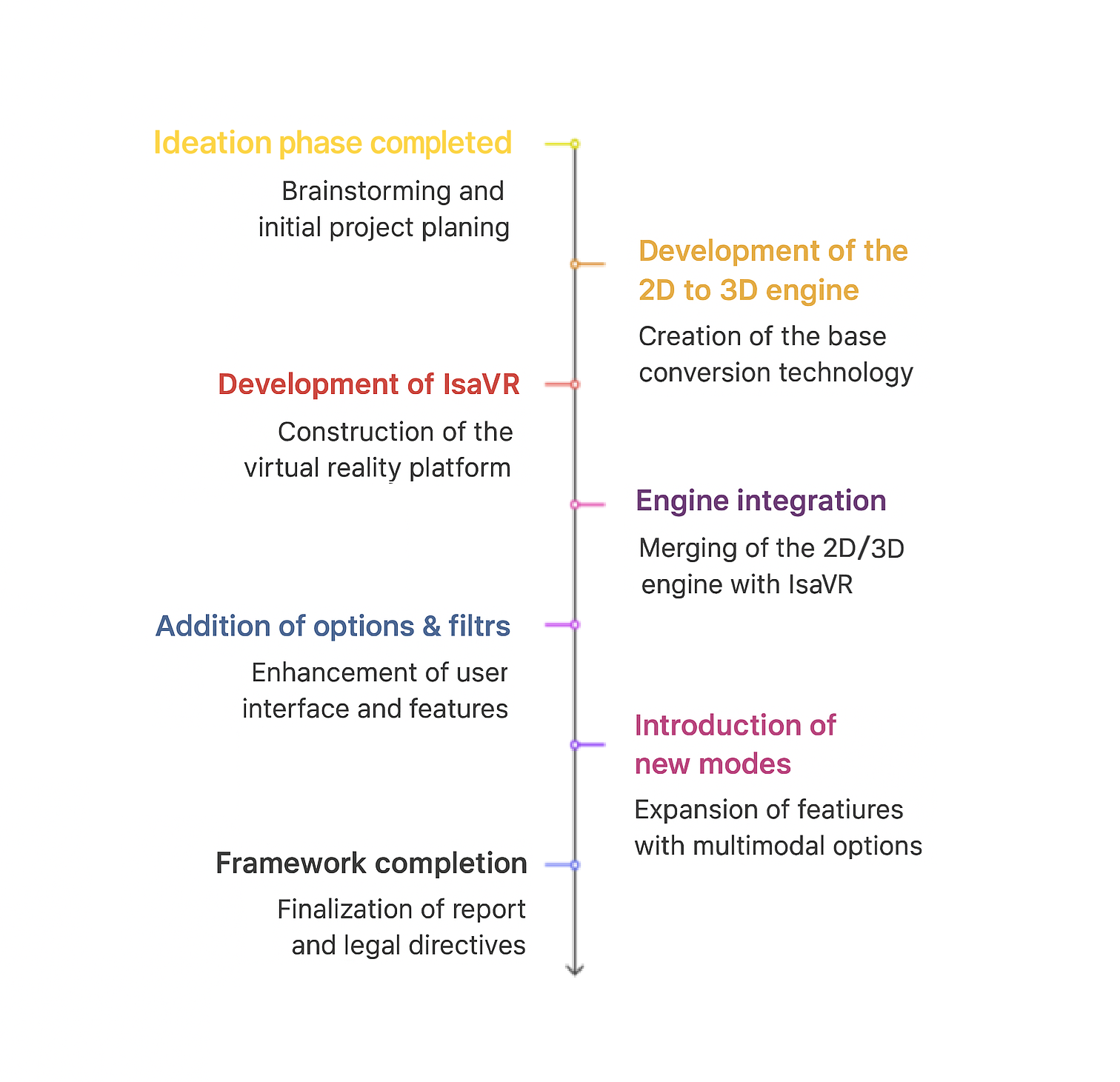
Short Term (6 to 12 months): :
- Prototyping and initial testing of 3D digitization (objects and environments).
- Pilot demonstrations using VR headsets in simulated hearings.
- Initial validation by select legal practitioners.
Long Term (12 to 24 months and beyond) :
- Sustainable integration into virtual courtroom platforms.
- Publication of guidelines and a normative framework for the use of immersive evidence.
- Potential deployment in real judicial contexts, subject to approval by relevant authorities.
This is an interdisciplinary project involving neurosciences (basic research, neuroimaging, neuroinformatics, etc.). Are you a laboratory or R&D department interested in contributing? Don't hesitate to contact us.
This content has been updated on 07/21/2025 at 11 h 07 min.